Vote For Change
Vote For Accountability

Goal #1

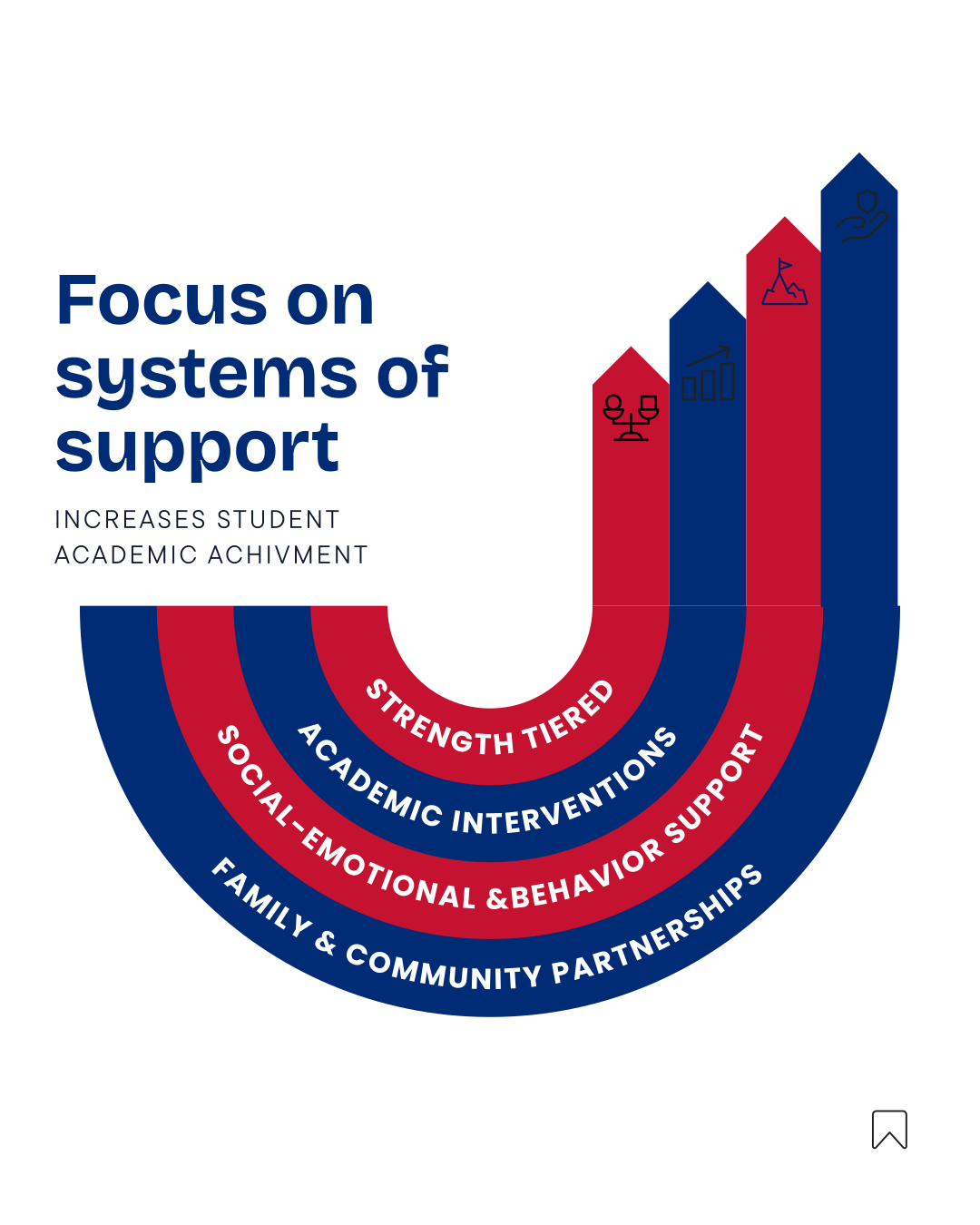
  • Focus on systems of support that increase student academic achievement.
Goal 1

Goal #2

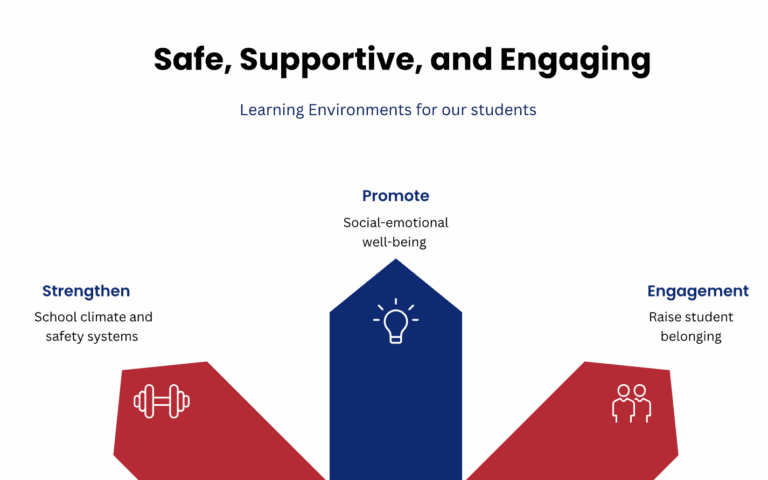
  • Focus on systems of support that improve safe, supportive, and engaging
    learning environments.

Goal #3

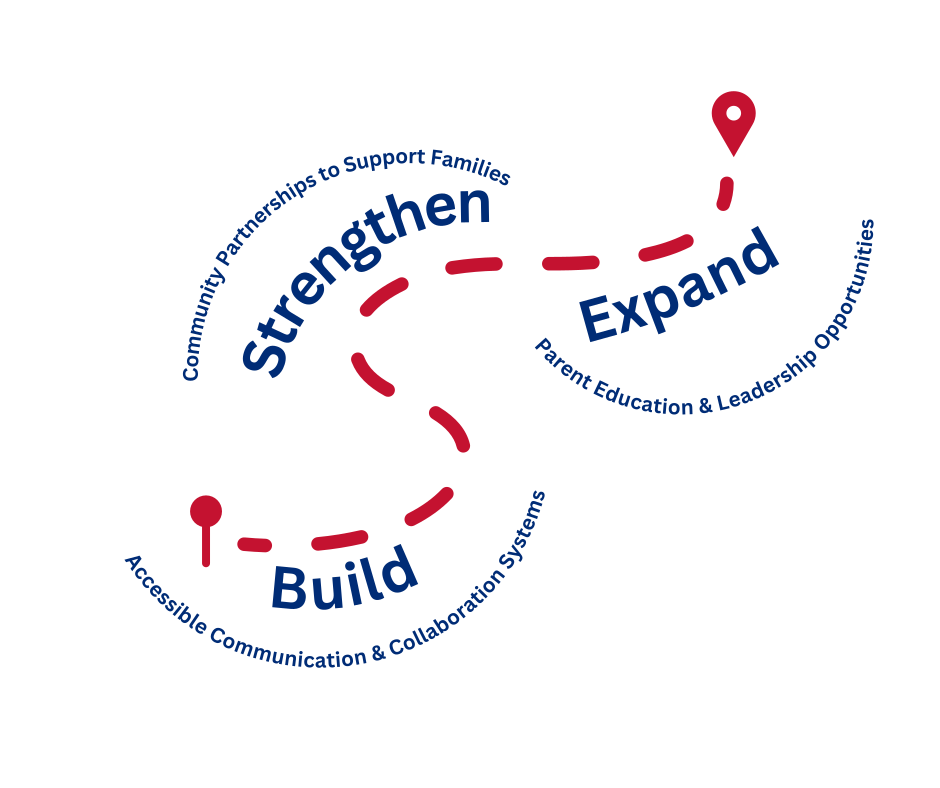
  •  Focus on systems of support that strengthen family engagement and empower parents as partners.
Goal 3 (1)

#1: Focus on systems of support that increase student academic achievement.

1. Strengthen Tiered Academic Interventions

Objective: Implement and deliver a Multi-Tiered System of Support (MTSS) that ensures 100% of students performing below grade level receive targeted interventions in literacy and mathematics within four weeks of identification.
  • Establish clear progress-monitoring cycles (e.g., every 6–8 weeks).
  • Provide professional development to staff on evidence-based instructional practices.
  • Use data teams to adjust interventions quickly when growth targets aren’t being met.

2. Expand Access to Social-Emotional & Behavioral Supports

Objective: Implement and deliver social-emotional learning (SEL) and behavioral supports into classroom practice so that students report feeling safe, supported, and engaged in annual student surveys.
  • Train all educators on SEL strategies aligned with CASEL competencies toward establishing consistent and predictable behavior management systems.
  • Embed mental health supports and counseling access into the school support system.
  • Track reductions in chronic absenteeism and behavior referrals as indicators of supportive learning environments.

3. Strengthen Family & Community Partnerships for Learning

Objective: Implement and deliver family engagement systems that increase parent participation in academic workshops, student progress meetings, and school decision-making committees.
  • Provide culturally relevant workshops for parents on supporting learning at home.
  • Offer accessible communication tools (multiple languages, digital platforms).
  • Partner with community organizations to provide tutoring, mentoring, and enrichment opportunities beyond the school day.

#2: Focus on systems of support that improve safe, supportive, and engaging learning environments.

1. Strengthen School Climate & Safety Systems

Objective: Implement and deliver comprehensive schoolwide safety and climate frameworks so that all schools maintain consistent behavior expectations and intervention protocols.

  • Train 100% of staff annually on trauma-informed practices and de-escalation strategies.
  • Conduct quarterly school climate and safety audits to ensure facilities and practices support a safe environment.
  • Reduce incidents of bullying, suspensions, and behavior referrals by implementing a schoolwide behavioral management system.

2. Promote Social-Emotional Well-Being

Objective: Implement and deliver social-emotional learning (SEL) structures into daily instruction and student services so that students report feeling safe, connected, and respected in annual surveys.

  • Provide SEL-focused professional development to all educators.
  • Establish early intervention systems for students demonstrating social-emotional or behavioral challenges.
  • Increase access to school counselors, social workers, and mental health supports.

3. Strengthen Student Engagement & Belonging

Objective: Implement and deliver opportunities for student voice, leadership, and enrichment so that every student has access to at least one extracurricular, leadership, or service-learning opportunity.

  • Establish student advisory councils at the school, district, and county levels.
  • Develop partnerships with community organizations to offer mentoring, afterschool programs, and enrichment.
  • Monitor student engagement data (attendance, participation, and surveys) to ensure continuous improvement.

#3: Focus on systems of support that strengthen family engagement and empower parents as partners.

1. Build Accessible Communication & Collaboration Systems

Objective: Implement and deliver family communication systems that ensure 100% of families receive timely, culturally responsive, and accessible updates about their child’s academic progress and school activities.

  • Provide communication in families’ home languages.
  • Expand use of digital platforms (apps, portals, texts) for two-way communication.
  • Conduct regular feedback surveys to measure family satisfaction and involvement.

2. Expand Parent Education & Leadership Opportunities

Objective: Offer parent education programs and leadership development opportunities so that families participate in academic workshops, leadership councils, or volunteer opportunities.

  • Host workshops on supporting literacy, math, and social-emotional learning at home.
  • Train and mentor parents to serve on school site councils, advisory committees, and district-level decision-making groups.
  • Create “Parent Ambassador” or “Parent Mentor” programs to encourage peer-to-peer engagement.

3. Strengthen Community Partnerships to Support Families

Objective: Establish partnerships with local organizations to provide wraparound services (health, mental health, technology, and enrichment) so that families feel fully supported in meeting their children’s needs.

  • Partner with community agencies to host family resource fairs.
  • Expand access to counseling, nutrition, technology, and after-school programs.
  • Monitor parent engagement data (attendance at events, workshop participation, and survey results) to evaluate progress.